

 CALL THE LOCATION NEAREST YOU
Wisdom Teeth Removal Age: Why Earlier Is Often Better
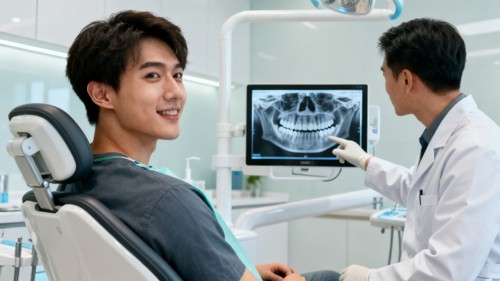
Wisdom teeth removal age can affect how straightforward the procedure is and how recovery feels afterward. Wisdom teeth, or third molars, often develop during the late teenage years and early adulthood, but their timing and position vary from person to person. Some never cause trouble, while others become trapped, crowded, or difficult to clean. At Oral Surgeons, P.C., serving Des Moines, Ankeny, and Clive, our Wisdom Teeth team uses a dental examination and imaging to understand what is happening in your mouth.
How Roots and Bone Density Change Over Time
As wisdom teeth mature, their roots may become longer and more firmly positioned in the jaw. The surrounding bone can also become denser with age, which may make extraction more involved. Younger patients often have developing roots and bone that is easier for a clinician to work through, but age is only one part of the picture; tooth angle, depth, proximity to nerves, and overall health matter too.
The difference is not a strict cutoff at a particular birthday. A person in their late twenties may have a simple extraction, while a younger person with deeply impacted teeth may need a more careful surgical approach. Still, earlier evaluation can provide more choices, especially if imaging shows that the teeth are likely to create problems later.
Best Age to Remove Wisdom Teeth
There is no universal best age to remove wisdom teeth because not everyone needs the teeth removed. According to AAOMS Oral and Maxillofacial Surgeons, wisdom teeth are the last teeth to develop and erupt into the mouth, usually between the ages of 17 and 25, and they may not need extraction if they grow in completely and remain functional, painless, and disease-free. If removal is recommended, late teens to early twenties is often considered a practical window because the teeth may be easier to access and recovery may be more predictable.
The decision should be based on an examination rather than age alone. Our surgeons may recommend observation when the teeth are healthy, functional, easy to clean, and not damaging nearby structures. On the other hand, pain is not required for a wisdom tooth to deserve attention; a tooth can be trapped or contributing to repeated inflammation before symptoms become obvious.
Why Late Teens to Early 20s Is Often Ideal
Late adolescence and early adulthood can offer a useful balance between visibility and timing. The teeth are usually developed enough to evaluate with imaging, while the roots may not yet be fully mature. If removal is appropriate, treating the issue before repeated infections or damage to neighboring teeth may make the overall experience less complicated. A few practical considerations commonly shape the timing of a planned procedure:
- The position and depth of each wisdom tooth
- The stage of root development seen on imaging
- Available space behind the second molars
- Previous episodes of pain, swelling, or infection
Wisdom Teeth Removal in Your 20s vs. 30s
Wisdom teeth removal in your 20s vs 30s is less about a sudden change at age 30 and more about gradual changes in the teeth, jaw, and general health. Some people reach their thirties with healthy wisdom teeth that never need treatment. Others develop recurrent gum infections, cavities, or pressure on neighboring teeth after years of no symptoms.
| Factor | In the 20s | In the 30s |
|---|---|---|
| Root development | May be less mature in some patients | More likely to be fully developed |
| Jawbone | May be less dense | May be denser around the tooth |
| Recovery | Can be relatively predictable | May require more individualized preparation |
This table describes common tendencies, not guarantees. A well-positioned tooth in a thirty-year-old may be easier to remove than a deeply impacted tooth in a twenty-year-old, so an examination remains the deciding step.
Signs You Shouldn't Wait Any Longer
Some wisdom teeth problems announce themselves with pain, but others begin quietly. Swelling behind the last molar, a bad taste, tenderness when chewing, or difficulty opening the mouth can signal inflammation around a partially erupted tooth. A cavity in the wisdom tooth or the molar in front of it is another reason to arrange an evaluation.
Waiting can allow a manageable problem to become an urgent one. Schedule a consultation at one of our four locations if symptoms keep returning, if an X-ray has shown impacted wisdom teeth, or if your dentist has raised concerns about space or damage to nearby teeth. Seek prompt dental care for significant facial swelling, fever, trouble swallowing, or difficulty breathing.
What to Expect During Recovery at Any Age
Recovery usually involves some soreness, swelling, and limited chewing for a few days, although the experience varies with the number and position of the teeth removed. Our team provides detailed wisdom tooth removal instructions for protecting the extraction sites, managing discomfort, and returning gradually to normal activities.
During the first day, rest and choose foods that require little chewing. Avoid disturbing the blood clot at each site, and follow the guidance you receive about rinsing, brushing, medications, and physical activity. Contact our office if pain becomes worse instead of better, bleeding does not settle with recommended pressure, or you develop fever or worsening swelling.
Conclusion
The best wisdom teeth removal age depends on tooth position, root development, symptoms, and individual health rather than a single deadline. Even so, an evaluation in the late teens or early twenties can identify potential problems while treatment may be more straightforward. If you are older or already having symptoms, it is still worth getting a professional assessment instead of assuming you have waited too long.
Frequently Asked Questions
What is the best age to remove wisdom teeth?
For people who need removal, late teens to early twenties is often a practical time to evaluate and treat wisdom teeth. The right timing depends on imaging, symptoms, tooth position, and overall health.
Can wisdom teeth be removed after age 30?
Yes. Wisdom teeth can be removed after age 30 when they cause problems or are judged likely to create them. The clinician may discuss mature roots, denser bone, healing, and other individual risk factors.
Do all wisdom teeth need to be removed?
No. Some wisdom teeth remain healthy, functional, and easy to clean. A dental professional may recommend monitoring when there is no clear reason for extraction.
What are signs that wisdom teeth are causing problems?
Common signs include recurring pain, swelling, gum tenderness, bad taste, difficulty opening the mouth, cavities, and food trapping behind the last molar. Fever or significant facial swelling calls for prompt care.
Should I wait if my wisdom teeth do not hurt?
Lack of pain does not always mean the teeth are harmless. An examination and imaging can show whether a tooth is impacted, difficult to clean, or affecting nearby structures, and can clarify whether monitoring is appropriate.
About the Author
Oral Surgeons, P.C. has offices at 7400 Fleur Drive Ste. 200 and 3940 Ingersoll Avenue in Des Moines, 460 NW 36th Street in Ankeny, and 12345 University Avenue Ste. 102 in Clive, Iowa. The practice is led by Dr. Scott Johnson, DDS, MD, who completed his dental studies at the University of Iowa College of Dentistry and his medical degree and Oral and Maxillofacial Surgery residency through the University of Pittsburgh Medical Center. Dr. Johnson is board certified by the American Board of Oral and Maxillofacial Surgery and is a member of the American Association of Oral and Maxillofacial Surgeons and the American Dental Association. The practice also includes Dr. John Janulewicz, Dr. Ryan Marsh, Dr. Luke Freml, Dr. Michael Morio, Dr. Brock Radich, Dr. Stephen Ridenour, Dr. Michelle Peters, and Dr. Jeffery Schwarzkopf.
Medical Disclaimer
The information provided in this article is for educational purposes only and does not constitute professional medical or dental advice, diagnosis, or treatment. Whether wisdom teeth should be removed can only be determined through an in-person examination and imaging. Always seek the advice of your dentist, oral surgeon, or other qualified health provider with any questions regarding a dental condition. Never disregard professional advice or delay in seeking it because of something you have read here.
Blog Post Author

Contributed by DentalROI
DentalROI provides relevant dental content to help providers educate patients. The statements, services, and products referenced in this article have not been evaluated by the Food and Drug Administration, and they are not intended as a substitute for professional medical advice, diagnosis, or treatment. Always seek the advice of your dental provider with any questions or issues you may have. Specific recommendations may vary in different circumstances, so individual consultation is important.