
 CALL THE LOCATION NEAREST YOU
What to Eat After Wisdom Teeth Removal: A Day-by-Day Food Guide
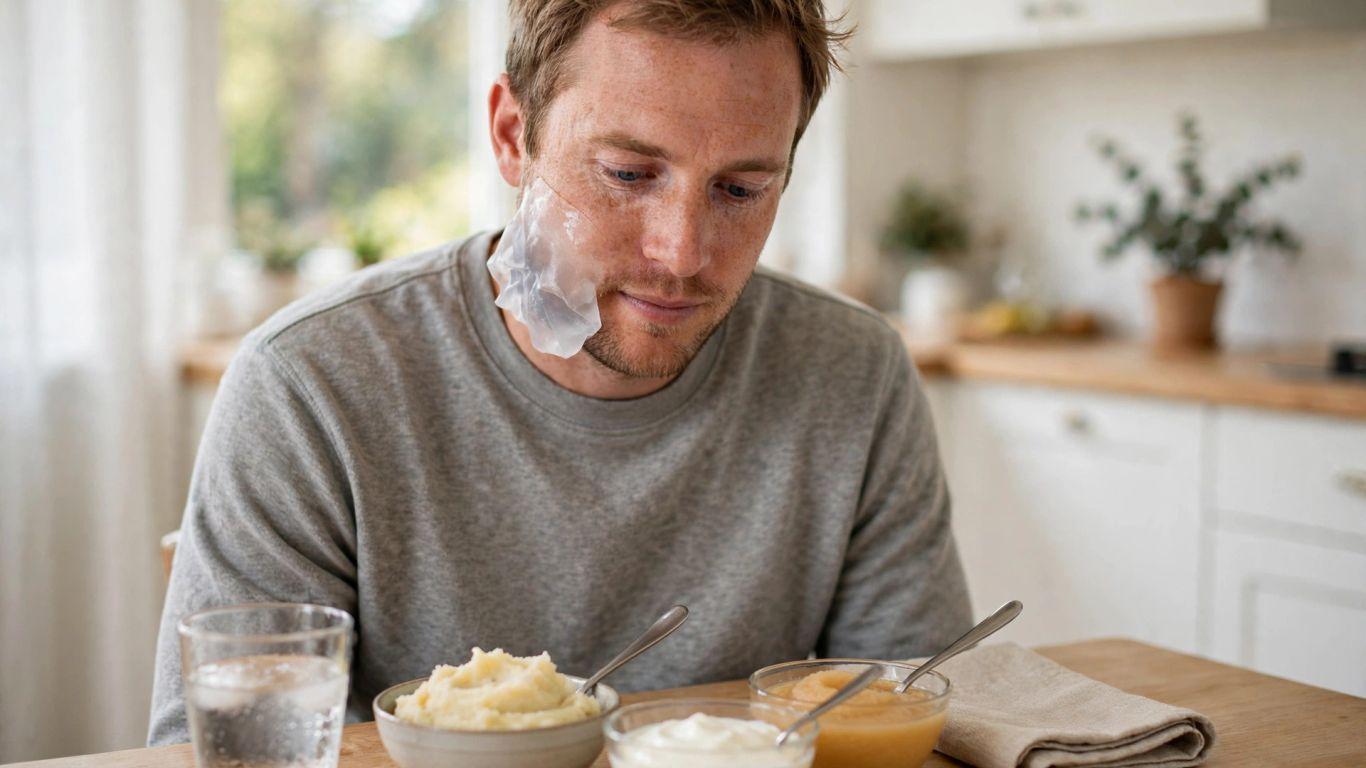
Knowing what to eat after wisdom teeth removal makes recovery easier. The first day is usually about taking things slowly, and your surgeon’s instructions should guide when you begin drinking or eating. This day-by-day guide is general; your own post-operative instructions always come first.
Day of surgery: Choose cool, smooth foods
Your mouth may still be numb, so choose options that are easy to swallow and need little or no chewing.
Start with small sips once your surgeon says it’s okay
When your surgeon says you can drink, begin with small sips from a cup. Pause if swallowing feels uncomfortable or you feel nauseated, and follow any instructions about fluids after anesthesia.
Try yogurt, applesauce, or pudding
Smooth foods do not require much chewing and are easy to portion. Choose smooth versions without seeds, crunchy toppings, or pieces that may be uncomfortable near the extraction sites.
Add lukewarm broth or a smooth smoothie by spoon
Try broth that has cooled to lukewarm, or a smooth smoothie eaten with a spoon rather than a straw. Avoid anything hot while your mouth is numb.
Keep food away from the extraction sites
Take small bites, swallow carefully, and avoid foods that leave hard pieces behind. Do not probe or press around the sockets.
Days 1–2: Stick with soft, filling options
Soft foods can provide more variety without asking your jaw to do much work. Keep portions modest and choose foods that can be mashed or eaten with a spoon.
Try mashed potatoes, oatmeal, or soft scrambled eggs
These foods are usually easy to soften and eat slowly. Let hot dishes cool before taking a bite, especially if numbness has not worn off.
Get protein from yogurt, cottage cheese, or blended beans
Think about texture and preparation rather than a strict menu:
| Food | Easy preparation | Texture to aim for |
|---|---|---|
| Yogurt | Serve plain or smooth | Creamy, without crunchy toppings |
| Cottage cheese | Mash lightly if needed | Soft curds that feel comfortable |
| Beans | Blend until smooth | No firm pieces or skins |
| Oatmeal | Cook until very soft | Moist rather than thick or dry |
Eat small portions and chew away from sore areas
If one side is less sore, chew gently there when you are ready. There is no need to push through pain to finish a meal.
Keep foods cool or lukewarm if heat increases discomfort
Very hot food can be a problem while your mouth is numb because you may not notice the heat right away.
Days 3–4: Add soft foods with more texture
Let comfort, not the calendar alone, set the pace. Introduce one new texture at a time. If your surgeon gave you a specific timeline, follow that advice.
Try tender pasta, flaky fish, or well-cooked vegetables
Cut food into small pieces and make sure vegetables are soft enough to break apart easily. If a bite feels difficult, return to softer foods for a while.
Make meals moist with broth, sauce, or gravy
Dry or crumbly food can take more effort to chew. A little broth, sauce, or gravy can help it go down more easily.
Test new textures gradually and stop if chewing hurts
Begin with a few small bites and notice whether soreness increases. Healing does not follow the same schedule for everyone.
Keep rinsing as directed after meals
Food can collect around the healing area, so follow your surgeon’s directions for rinsing. Our wisdom tooth removal instructions explain the aftercare steps.
Days 5–7: Ease toward a more varied diet
The days listed here are a general guide, not a promise that every food will feel comfortable by a certain date.
Add soft sandwiches, pancakes, or tender chicken
Cut each into small pieces and avoid crusty edges or dry, chewy bites. If it feels difficult to chew, wait before trying again.
Chew slowly and use the less tender side of your mouth
Give yourself extra time at meals and keep bites small. Stop if discomfort builds.
Return to firmer foods only if they feel comfortable
A food being listed as soft does not mean it will suit everyone at this stage. Comfort is a better guide than finishing a particular food on schedule.
Follow your surgeon’s advice if healing is slower than expected
It is fine to stay with softer foods longer if that is what feels manageable. Contact the dental team if you are uncertain whether to advance your diet.
After the first week: Return to regular foods gradually
Add firmer foods in small steps and keep following any restrictions from your surgeon, even if you feel mostly back to normal.
Reintroduce crunchy or chewy foods when your mouth feels ready
Begin with a small amount. If chewing is uncomfortable, stop and try again later.
Check for food trapped near the extraction sites
Do not scrape or poke at a site to dislodge food. If something seems stuck and gentle care does not help, ask your dental team.
Keep avoiding anything your surgeon has restricted
Continue to avoid any food, drink, or habit your surgeon specifically told you to avoid.
Contact your dental team if pain or swelling worsens
Some discomfort may occur, but worsening pain or swelling is a reason to call. Do not rely on diet adjustments alone for worsening symptoms. See our post-operative pain management guidance.
Foods and eating habits to avoid during early recovery
Favor smooth, soft choices and take care with temperature while your mouth is numb. Follow your surgeon’s directions if they differ from these general reminders.
Skip chips, nuts, seeds, and other foods that can lodge in the sockets
Hard, crunchy foods and small pieces such as seeds can be difficult to manage near the extraction sites.
Avoid tough, chewy foods that strain your jaw
If a food takes a lot of force or repeated chewing, set it aside and choose something softer.
Don’t use straws or smoke while your surgeon advises against them
Follow your surgeon’s instructions about straws and smoking during recovery, and ask the team when a restriction ends.
Avoid very hot foods and drinks while your mouth is numb
Numbness can make it harder to judge temperature. Let hot foods and drinks cool before you try them.
Make eating and hydration easier
Keep easy-to-eat options available and plan to drink from a cup. Keep your surgeon’s written instructions somewhere easy to find.
Plan simple meals before surgery
Have a few soft foods ready at home. For example:
- Smooth yogurt or applesauce for a quick snack.
- Oatmeal or mashed potatoes for a soft meal.
- Cottage cheese or blended beans for another gentle option.
- Broth or a smooth soup served lukewarm.
Review our pre-operative instructions when planning.
Choose foods that need little chewing and are easy to swallow
If a food feels scratchy, dry, or difficult to manage, put it aside and choose something gentler.
Drink fluids from a cup and avoid alcohol during recovery
Avoid alcohol as directed by your dental team, particularly if you have been given medication. Small, regular sips may feel easier than a large drink.
Follow your surgeon’s instructions for rinsing and oral care
Use the rinsing and brushing instructions provided for your procedure and ask your team if you are unsure how to clean the area.
Conclusion
What to eat after wisdom teeth removal changes as comfort improves: start with smooth, easy-to-swallow foods, then add soft textures gradually. For general background, see the American Dental Association’s MouthHealthy wisdom teeth guide. If symptoms worsen or you are unsure what to do, contact our office.
Frequently Asked Questions
How soon can I eat after wisdom teeth removal?
Follow your surgeon’s instructions about when to begin eating or drinking, especially if you had anesthesia. When you are cleared to start, try a small amount of a smooth food or fluid and see how it feels.
What foods are easiest to eat on the first day?
Smooth foods such as yogurt, applesauce, or pudding may be easier because they need little or no chewing. Choose options that suit your instructions and avoid hard pieces or toppings.
When can I eat solid food again?
There is no single timeline that suits everyone. Gradually try soft foods with more texture as comfort allows, and follow your surgeon’s advice about when to return to firmer foods.
Can I drink a smoothie after surgery?
A smooth smoothie may be an option if it fits your post-operative instructions. Eat it with a spoon rather than using a straw when your surgeon has advised against straws.
What should I avoid eating during early recovery?
Hard, crunchy, seeded, tough, or chewy foods may be difficult to manage early on. Your surgeon may also give you specific restrictions, so use those instructions as your guide.
How can I keep food from getting near the extraction sites?
Choose soft foods, take small bites, and follow the oral-care directions from your dental team after meals. Do not poke or scrape the sockets; contact the team if you are unsure how to clear an area.
When should I contact my dental team?
Contact your dental team if pain or swelling worsens, if you have a concern about healing, or if you are unsure how to follow your recovery instructions. They can advise you based on your procedure and symptoms.
About the Author
This article was prepared for Oral Surgeons, P.C., serving Central Iowa from offices in Des Moines, Ankeny, and Clive, and reflects the experience of our board certified oral and maxillofacial surgeons: Jeffery Schwarzkopf, DDS; Scott Johnson, DDS, MD; John Janulewicz, DDS, MD; Ryan Marsh, DDS; Luke Freml, DDS; Michael Morio, DDS; Brock Radich, DDS; Stephen Ridenour, DDS; and Michelle Peters, DDS. The practice is a proud member of the American Association of Oral and Maxillofacial Surgeons, the American Board of Oral and Maxillofacial Surgery community, and the American Dental Association.
Disclaimer
This content is for general educational purposes only and is not a substitute for professional dental or medical advice. Always follow the post-operative instructions given by your surgeon. Consult a qualified professional about your specific situation.
Blog Post Author

Contributed by DentalROI
DentalROI provides relevant dental content to help providers educate patients. The statements, services, and products referenced in this article have not been evaluated by the Food and Drug Administration, and they are not intended as a substitute for professional medical advice, diagnosis, or treatment. Always seek the advice of your dental provider with any questions or issues you may have. Specific recommendations may vary in different circumstances, so individual consultation is important.