

 CALL THE LOCATION NEAREST YOU
PRF (Platelet-Rich Fibrin) in Oral Surgery: How It Speeds Healing
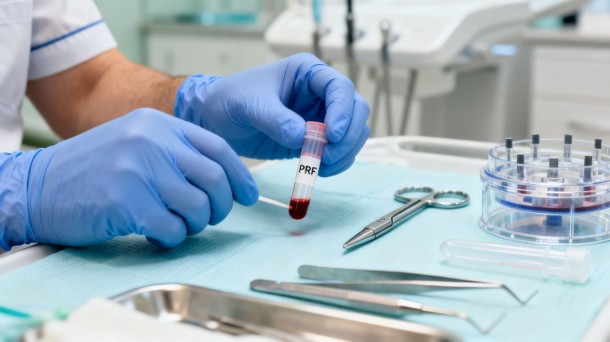
What PRF Is and How It Works
PRF, or platelet-rich fibrin, is a preparation made from a small sample of a patient's own blood. During processing, platelets and other blood components become concentrated within a fibrin network. The resulting material can be placed at a surgical site as a membrane, plug, or gel-like layer. In oral surgery, the goal is to support the body's normal healing process rather than replace it.
How PRF Is Made From a Patient's Own Blood
A clinician draws a small amount of blood, usually shortly before or during the planned procedure. The sample is placed in a centrifuge, which separates its components according to their density. The timing and speed of centrifugation affect the final consistency, so preparation follows a specific clinical protocol. Once processed, the fibrin-rich portion is collected for use during surgery. Because it comes from the patient, PRF is autologous, meaning it is not obtained from a donor or made from a synthetic filler.
The Role of Fibrin, Platelets, and Growth Factors
Fibrin forms a natural protein network that can hold cells and signaling molecules at the treatment site. Platelets are involved in clotting and release substances that participate in tissue repair. PRF also contains white blood cells and other components of blood, depending on the preparation method. These elements do not force a wound to heal instantly. Instead, they may create a local environment that supports clot stability, early tissue repair, and the gradual development of new tissue.
How PRF Differs From PRP
PRF and platelet-rich plasma, or PRP, are both made from a patient's blood, but they are prepared differently. PRF generally forms a fibrin matrix during processing, while PRP is typically collected as a liquid platelet concentrate. The matrix gives PRF a more cohesive form that can be placed into or over a wound.
The two treatments are not interchangeable in every situation. Our oral surgeons choose a preparation based on the procedure, the desired handling properties, and the patient's clinical needs.
Why Dentists Use PRF in Oral Surgery
Oral surgery creates wounds in areas that move frequently and are exposed to saliva, chewing forces, and oral bacteria. PRF may give the healing site a concentrated fibrin structure during the early stages of repair. It is usually considered an adjunct, meaning it is used alongside careful surgical technique and standard aftercare. Depending on where it is placed, it may support a blood clot, soft tissue, or bone-healing environment.
Oral Surgery Procedures That May Benefit From PRF
PRF is used selectively across several oral surgery procedures. The rationale is usually strongest when a site needs clot support, soft-tissue coverage, or help maintaining a healing material in position. The examples below describe situations in which PRF may be considered, not guarantees of faster healing.
After a tooth is removed, the socket must form and maintain a blood clot before new tissue can fill the space. A PRF plug may be placed in the socket to support that early stage, whether for a routine extraction or a more involved wisdom tooth removal. During dental implant treatment, PRF may be placed around the surgical site when soft-tissue or early bone healing is a concern, particularly when the procedure is combined with another regenerative step.
PRF may also be combined with bone grafting procedures to provide a fibrin-rich material around the graft, helping hold particulate material together or covering the grafted area. In gum surgery, a PRF membrane can be placed over or within the treated area when the clinician wants a naturally derived fibrin layer to support soft-tissue coverage and early repair.
What the PRF Treatment Process Looks Like
For many patients, PRF adds only a short blood-draw and preparation step to an already planned oral surgery procedure. The blood is usually collected around the time of surgery, then processed while the clinical team prepares the site. The blood draw is similar to a routine laboratory sample; most patients feel a brief pinch. The blood tubes are placed in a centrifuge to separate the layers, and the clinician then collects the fibrin-rich portion and may compress or shape it into a membrane, plug, or another form suited to the surgical site.
After the tooth, diseased tissue, or other target has been treated, the surgeon places the PRF where it is intended to support healing. It may fill a socket, cover a graft, or lie against soft tissue. Patients generally do not feel the PRF being placed because the area is anesthetized, and the additional step is performed during the same clinical visit rather than as a separate appointment.
What Patients Typically Notice During Recovery
Most recovery sensations come from the surgery itself rather than from the PRF. Patients may notice soreness, swelling, mild oozing, or tenderness as the anesthesia fades. A small blood draw may also leave temporary bruising or sensitivity at the collection site.
Useful preparation includes arranging soft foods, keeping recommended medications available, and planning to rest during the first part of recovery. You can review general expectations on our post-operative pain management page.
Potential Benefits and Limitations of PRF
PRF is attractive because it uses the patient's own blood and can be prepared during the surgical visit. Some studies and clinical experiences suggest that PRF may be associated with less postoperative discomfort, swelling, or bleeding in selected oral surgery settings, and it may help organize the early wound environment by providing fibrin, platelets, and other blood components at the site.
The effect is not guaranteed, and pain control still depends on the operation, the patient's response, and the prescribed aftercare plan.
The quality and quantity of the prepared material can differ with blood characteristics, collection technique, centrifugation, and timing. Healing also depends on age, nutrition, tobacco use, oral hygiene, immune function, medical conditions, and the complexity of surgery.
PRF cannot correct an untreated infection, restore missing bone by itself when a graft is needed, or replace stable implant placement. Clinical studies on PRF have reported mixed results, partly because protocols and outcome measures differ, so evidence from one type of oral surgery should not automatically be applied to another.
Safety, Candidacy, and Recovery After PRF
PRF is made from the patient's own blood, which avoids donor-derived material, but it is still part of a surgical procedure. A patient may be considered a candidate when a planned procedure creates a site where clot support, soft-tissue coverage, or a fibrin-rich adjunct could be useful, and when the patient can undergo the planned surgery and follow postoperative instructions.
Patients should provide a complete list of medical conditions, prescriptions, supplements, and allergies. Conditions affecting blood clotting, immune function, blood counts, or wound healing may influence the decision, and blood thinners and other medications should be discussed well before surgery. Never stop an anticoagulant or other prescribed medicine without direction from the prescribing clinician and oral surgeon.
The risks of PRF usually relate to the blood draw, the surgical wound, or the underlying procedure. Bruising, temporary tenderness, persistent bleeding, infection, delayed healing, and an unsatisfactory surgical result are possible, although the likelihood varies.
Following the written aftercare instructions is the most useful way to protect the clot and any placed material, including avoiding vigorous rinsing at first, keeping fingers away from the wound, choosing softer foods, and avoiding tobacco during healing. For questions before your visit, see our Frequently Asked Questions page or contact our team.
When to Contact the Oral Surgeon During Recovery
Contact the oral surgeon if bleeding does not slow with firm gauze pressure, pain becomes markedly worse after initially improving, or swelling interferes with swallowing or breathing. Fever, foul drainage, increasing redness, numbness that persists unexpectedly, or a wound that opens should also be reported. When in doubt, calling the office is safer than waiting several days.
Conclusion
PRF is a blood-derived adjunct that may support clot stability, soft-tissue repair, and selected bone-healing procedures in oral surgery. Its value depends on the operation, the patient's health, and the surgeon's technique, so it should be discussed as one part of a complete treatment plan rather than as a guaranteed shortcut to recovery.
Frequently Asked Questions
What does PRF stand for?
PRF stands for platelet-rich fibrin. It is prepared from a patient's own blood and contains a fibrin network with platelets and other blood components.
Is PRF the same as PRP?
No. Both are blood-derived platelet treatments, but PRF forms a fibrin matrix and is generally handled as a membrane, plug, or cohesive material, while PRP is commonly prepared as a liquid concentrate. According to the American Association of Oral and Maxillofacial Surgeons' overview of PRP and PRF and their role in healing, both materials are derived from a patient's own blood and used to support tissue regeneration in oral and maxillofacial surgery.
Does PRF make oral surgery painless?
No. PRF may support healing and may reduce discomfort in some situations, but it does not eliminate surgical soreness or replace appropriate pain management.
How long does PRF stay in the mouth?
PRF is a temporary biological material. It gradually changes as the body repairs the area, but the timing varies with the preparation, placement site, and patient's healing response.
Can PRF replace a bone graft?
Usually not when a graft is needed to restore sufficient bone volume. PRF may be used with graft material as an adjunct, but it does not automatically provide the same structural function as a bone graft.
Is PRF safe for everyone?
PRF may be appropriate for many patients, but candidacy depends on the planned procedure, medical history, medications, blood health, and ability to follow aftercare instructions. The treating clinician must make that assessment.
What should I do if recovery seems abnormal?
Call the oral surgeon if bleeding persists, pain or swelling worsens, fever or drainage develops, or swallowing and breathing become difficult. Early contact allows the office to determine whether the symptoms are expected or require treatment.
About the Author
Oral Surgeons, PC has served the Des Moines, Iowa area for decades from offices in Des Moines, Ankeny, and Clive, with a surgical team that includes Dr. Johnson, Dr. Janulewicz, Dr. Marsh, Dr. Freml, Dr. Morio, Dr. Radich, Dr. Ridenour, Dr. Peters, and Dr. Schwarzkopf.
The practice is a proud member of the American Association of Oral and Maxillofacial Surgeons and the American Dental Association, providing oral and maxillofacial surgery, dental implants, bone grafting, and pre-prosthetic and reconstructive procedures, including PRF and other regenerative adjuncts, to patients throughout the Des Moines metro area.
Disclaimer
The information provided in this article is for educational purposes only and does not constitute professional medical or dental advice, diagnosis, or treatment recommendations. Whether PRF is appropriate for a given procedure can only be determined through an in-person evaluation. Always consult your oral surgeon with any questions regarding your treatment.
Blog Post Author

Contributed by DentalROI
DentalROI provides relevant dental content to help providers educate patients. The statements, services, and products referenced in this article have not been evaluated by the Food and Drug Administration, and they are not intended as a substitute for professional medical advice, diagnosis, or treatment. Always seek the advice of your dental provider with any questions or issues you may have. Specific recommendations may vary in different circumstances, so individual consultation is important.